

A woman stands in her kitchen at 9 p.m., not hungry, holding a bag of chips she swore she would not buy. The question worth asking is not what is in the bag but who she is being in that moment. The reach for that snack is rarely about hunger. It's about a narrative. It's about a self.
Most of us talk about food as fuel, but we live it as identity. The foods we choose tell a story about who we are, or more accurately, who we're trying to be. Whether you call yourself a "foodie," a "health-conscious eater," or someone who "can't resist sweets," you're not just describing what you eat. You're scripting a version of yourself that gets reinforced every time you reach for that plate. Your self-image doesn't merely influence your food choices, it constructs them, over and over, meal after meal.
Understanding this distinction changes how you eat. It moves the question from "What should I eat?" to "Who am I being when I eat this?" The answer to the second question often reveals patterns that no diet rule ever could. And that's where real change begins, not in the kitchen, but in the pause before the plate reaches your mouth.
How does food shape your identity?
Think about the last time you chose a particular food specifically because it fit an image you hold of yourself. Maybe you ordered a salad because you see yourself as "someone who eats healthy." Or you reached for dessert because "you deserve it," a tiny performance of permission and self-care. Or you grabbed fast food because in that moment, "I'm someone who doesn't have time to cook" felt more true than any other truth about you. Food choices often function less as pure fueling decisions and more as identity claims, small acts of self-verification that say, "I am the kind of person who eats this way."
This isn't accidental. Research on self-verification theory shows that people gravitate toward choices that confirm an existing self-concept, even when those choices don't serve their stated goals. If you've labeled yourself as "someone who can't stick to a diet," that story starts recruiting evidence. You reach for the chips, eat the whole bag, and think, "See, that's just who I am." The label becomes the loop. The loop becomes the fact.

This is where identity work through mindful eating begins. The practice asks a simple question before each bite: Am I feeding a body right now, or am I performing a self? Most of the time, the answer is both. The body is a prop in a self-narrative. And once you see it clearly, you can choose differently, or at least choose consciously instead of on autopilot.
How does your identity affect your food choices?
The mechanism runs in reverse, too. Once a self-image forms, "I don't do dessert," "I eat clean," "I'm not a breakfast person", your reward system starts defending that identity rather than simply responding to appetite. The brain has already decided what kind of person eats what, and it protects that story fiercely. This is where stress enters. An identity threat (a hard day, a criticism, a broken streak) spikes cortisol, a stress hormone that does something subtle but powerful: it drives cravings for high-fat, high-sugar food as a fast identity-repair attempt. Your brain is looking for a win, and the fastest win it knows is pleasure. Food becomes a tool for patching a fractured self-image.
Common triggers for identity-based stress eating include:
- A day that contradicts how you see yourself ("I meant to work out, but I didn't")
- Public criticism or judgment about your eating or appearance
- Breaking a rule you've set for yourself, especially one tied to identity ("I said I wouldn't eat sugar")
- A significant change to your routine or social status
- Feeling invisible or overlooked, eating as a way to reclaim agency
A concrete example: You've been eating "clean" for three weeks. Then Friday evening comes, you've had a rough day, and you order fast food. You might narrate this as "I lost control," but something else is happening. A threat to the identity ("I'm someone disciplined") spiked your nervous system. Your amygdala, the threat-detection center of your brain, reacted. And to soothe the threat, your reward system reached for the quickest dopamine hit available. The burger isn't about hunger. It's a self-punishment-then-soothe loop tied entirely to the broken self-story.
"Elevated cortisol from stress can increase appetite and drive cravings for high-fat, high-sugar foods as the body seeks rapid reward and comfort."
Breaking this loop requires something that no amount of willpower addresses: differentiation. You have to see the craving as a passing mental state and a defensive reaction tied to identity, rather than as evidence of who you actually are. That pause, between the threat and the reach for food, is where freedom lives. It's also where stress hijacking your food choices becomes visible enough to interrupt.
What is the 3-3-3 rule for food, and why identity work asks a different question?
The viral 3-3-3 rule prescribes a simple structure: roughly three hours between meals, three macronutrients per plate, three ingredients per snack. It's an external control structure, and for some people it works as a framework. But here's the gap: a person can follow the rule precisely and still eat from anxiety, from boredom, from the need to confirm a self-story. The rule manages the plate. It doesn't touch the reason a hand reaches for it.
Research on rigid dietary rules tells a cautionary story. According to peer-reviewed studies in behavioral nutrition, strict rule-following is associated with poorer long-term adherence and a higher likelihood of rebound overeating once the rule is broken even once. Why? Because a rigid rule creates a binary: you're either following it or you're failing. And failure to a rule creates shame. Shame restarts the identity-defense loop the entire project was meant to interrupt.
The middle way looks different. Instead of counting ingredients, count the pause. One breath between noticing a craving and acting on it, long enough to ask what the craving is actually for. This is the middle way between rigid rules and eating on impulse. No rule to perfect, no identity to defend. Just a moment of noticing.
What cultural influences shape food choices?
Your earliest food memories are identity anchors. Growing up on home-style Indian food, dal, rice, ghee, or Mediterranean staples like olive oil, legumes, and herbs wires a felt sense of how eating is supposed to feel, apart from any diet trend. That's not nostalgia. That's the nervous system recognizing home. That's identity at the cellular level.
Fast food carries a different identity signal, though the signal itself is context-dependent. For some, it's convenience-as-belonging. For others, it's quiet rebellion against a family's food rules. For others still, it's assimilation into a new culture. The food itself is neutral. The narrative around it is everything.
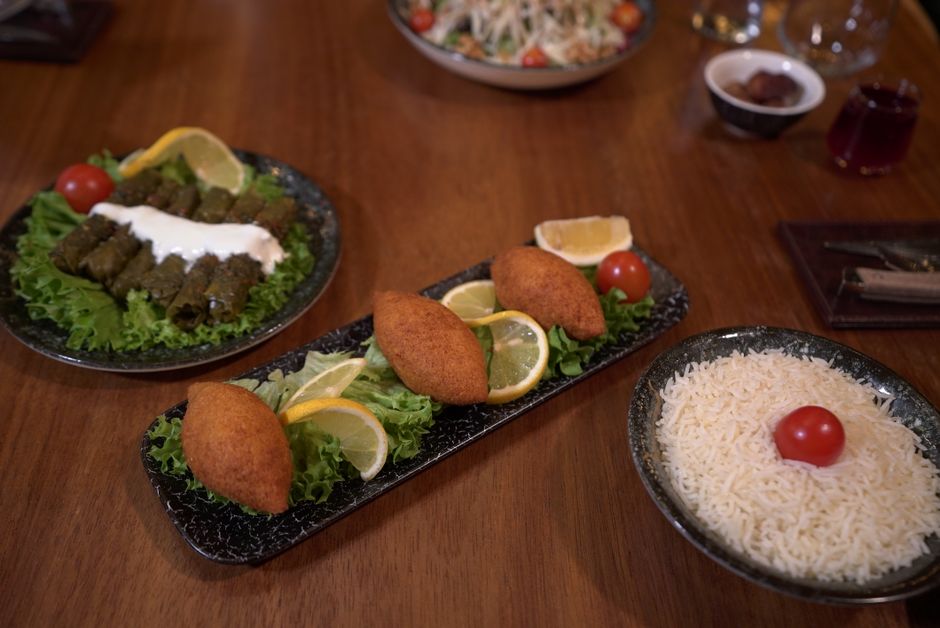
Research on dietary acculturation shows a measurable pattern: among immigrant populations, a shift toward higher fast-food and processed-food consumption typically occurs within roughly a decade of relocation, a finding documented in studies on food acculturation and identity. This isn't about availability alone. It's about identity negotiation. It's about which foods carry a felt sense of belonging in a new context, and which ones have started to feel foreign or like carrying the old country too visibly. The practice here is not "return to authentic cuisine" as a new rule, but noticing which foods carry a felt sense of belonging and which ones carry only habit.
The self-narrative you carry into every meal
In sum: repeated food choices become encoded not as isolated decisions but as identity-confirming loops. You reach for the same foods, in the same emotional contexts, until the pattern feels less like choice and more like destiny. "That's just how I am." You'll hear yourself say it. You'll believe it. And the belief will keep the pattern alive.
But here's what disrupts that loop: naming the narrative out loud. "I am someone who can't stop at one." Say it, and suddenly it shifts from fact to rehearsed story. That shift is small, but it's the first step toward interrupting the automatic reach.
There's also a difference between describing an eating episode after it happens ("I ate the whole bag") and experiencing it while it happens (noticing the third bite already tastes different, that something has changed). That gap, the space between automated action and lived awareness, is where identity-driven autopilot lives. And the practice is to spend more time in that gap.
"Interrupting automatic cue-response habit loops requires conscious attention at the moment of choice, not willpower alone."
Each act of noticing-then-choosing is a small act of self-construction. Not a grand identity shift declared all at once. Just an alternative identity built one meal, one pause, at a time.
Practicing conscious eating without adding another rule
The practice is simple. You don't need a program or a new rule. You need a single moment of noticing, repeated over time. This aligns with the neuroplasticity behind changing an eating habit, which shows that new neural pathways form through repeated, intentional attention to choice rather than through willpower alone.
- Before the first bite: Name the felt sense in one word (bored, proud, anxious, curious, tired, restless). This takes under 10 seconds and separates emotion from the impulse to eat.
- Mid-meal check: Pause after roughly a third of the plate and ask whether the next bite is for the body or for the story being told about the self. You don't need to answer "correctly." Just notice which one it is.
- Reframe cravings as data: Cravings are time-limited. According to behavioral research on food cravings, they typically peak and fade within about 15 to 20 minutes if not acted on, a pattern researchers call urge surfing. The craving will pass. You don't have to follow it.
- Keep it rule-free: No counting bites or grams. No new strictures. The aim is noticing the frequency of pause. The practice fails the moment it becomes another rule to perfect.
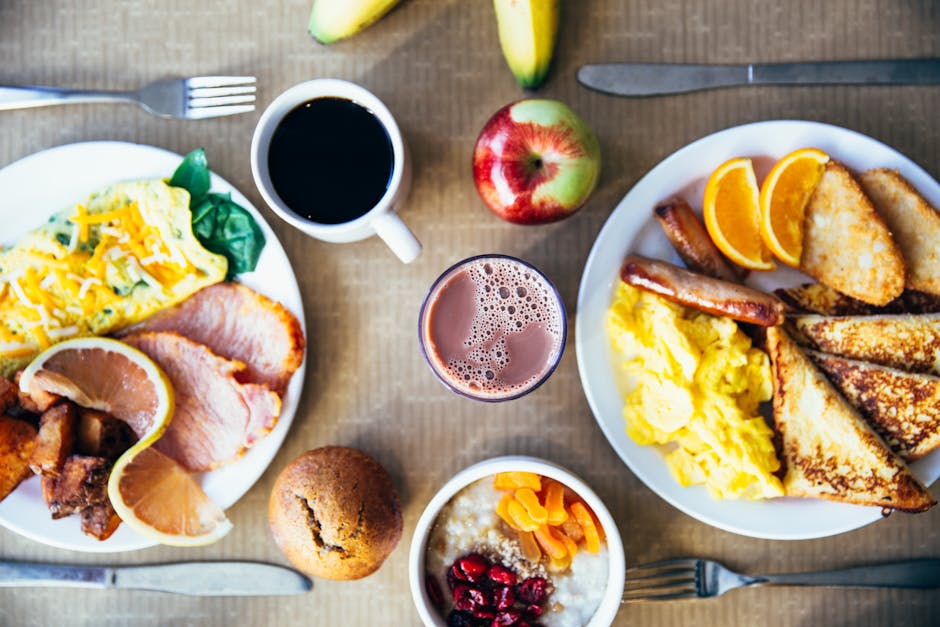
This is the piece that interests many psychology educators: the moment when eating stops being about willpower or rules and starts being about awareness. Awareness is what breaks the loop. Awareness is what makes choice possible.
Your next bite is a small act of self-definition
At your next meal, pause before the first bite. Ask whose eating this is. Pause before reaching for that snack at 9 p.m. Ask what feeling you're trying to feed. The felt answer matters more than any label attached to it. You don't need to judge the answer. You just need to know it.
This isn't a new rule to enforce. It's a single moment of noticing, repeated. And the inevitable missed pause, the times you eat without pausing, without asking, is not evidence of failure. Guilt just restarts the identity-defense loop the practice is meant to interrupt. A missed pause is information. That's all. This connects directly to releasing guilt around overeating, which transforms shame into curiosity.
Your self-image will continue to shape your food choices. The nervous system doesn't stop defending its sense of self just because you've noticed the pattern. But noticing changes what's possible. Once you see the loop, you're no longer entirely inside it. You're also watching it. And in that watching, freedom starts to grow, not as a permanent state, but as a space where choice becomes real. Your next bite is a small act of self-definition. So is the one after that. And so is the pause in between.